参加CHI2026国际学术会议,西班牙巴塞罗那

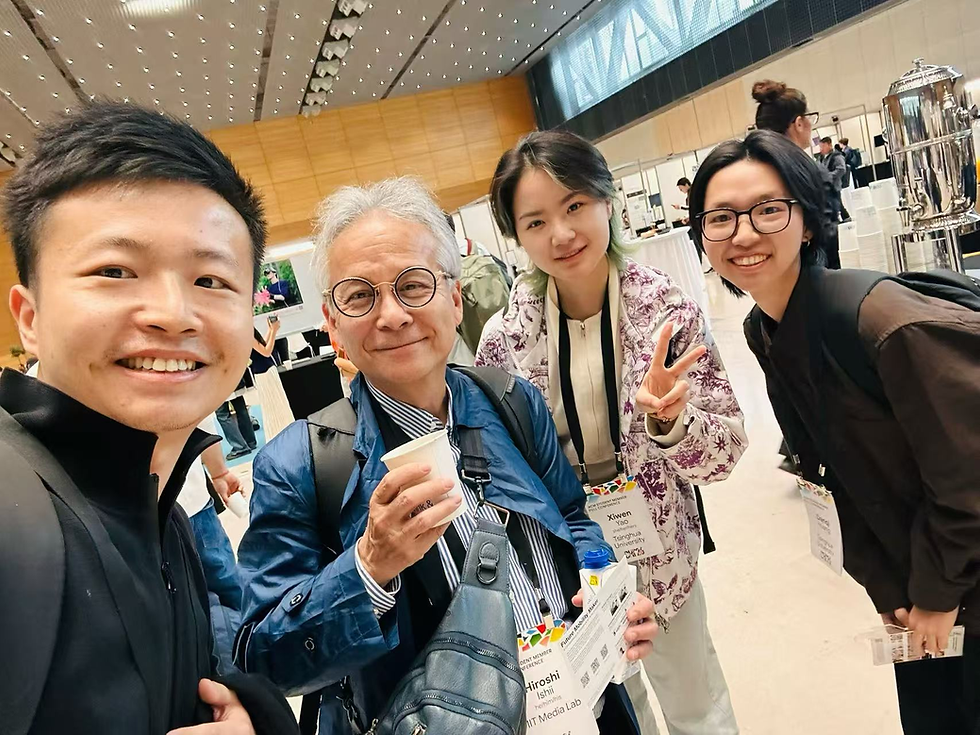
2026年4月中旬,Milab的学生前往西班牙巴塞罗那,参加了著名的ACM CHI计算系统人为因素会议(CHI 2026)。该会议于4月13日至4月17日举行,是人机交互领域首屈一指的国际盛会。在会议上,Milab展示了大量的工作,展示了他们的最新研究成果。
论文名为《Designing for Long-Term Emotion Regulation: A Breathing Biofeedback Game for Women in Compulsory Isolation Drug Rehabilitation Centers》第一作者为陈琦,该论文研究内容为在女性戒毒康复过程中,情绪调节困难是导致复吸的重要风险因素。与此同时,羞耻感、低自尊以及认知功能受损等问题,也进一步削弱了她们学习并持续运用情绪调节技能的能力。针对封闭环境中相关人群长期技能迁移研究相对不足的问题,我们设计并评估了一款基于低成本音频输入的七天阶段式呼吸生物反馈游戏。该游戏旨在支持情绪调节技能的习得与迁移,增强个体的自我效能感与自我接纳水平,并促进持续注意和长期参与。在一项为期六周、共有60名参与者参与的对照研究中,结果表明,该游戏不仅保持了较高水平的参与度,还有效提升了参与者的呼吸技能,促进了相关技能向日常生活中的迁移,并缓解了负性情绪。最后基于研究发现总结了五项设计启示。值得一提的是该论文荣获2026CHI Best Paper Award。

论文名为《基于拆解视频生成的 AI 增强现实重组指导:支持日常维修的脚手架设计》第一作者为邓文静,本研究提出了 RePairAR,探索如何利用多模态大语言模型,将拆解视频转化为可在增强现实(AR)中呈现的重装配指导,从而在不依赖特定产品说明书或 3D 模型的情况下,生成可用的AR维修指南。其核心目标是为用户提供可理解、可跟随的支持,降低日常家电维修的进入门槛。另外,RePairAR 体现了维修知识生成方式的改变,把原本较为封闭的、主要掌握在厂商或专家手中的维修知识重新组织为用户可以基于自身操作过程来生成、调用和掌握的实践资源。本研究希望以此推动更多关于“日常维修、延长产品使用寿命”的讨论,并支持更可持续的使用与消费行为。

论文名为《GestuProp: 3D Virtual Reality Prop Generation with Co-Speech Gestures》,作者为姚智皓、姚郗文等。本研究提出了 GestuProp,探索如何利用手势与语言的协同表达,让用户在虚拟现实环境中直接生成三维道具。其核心目标是将用户自然的身体表达转化为生成式 AI 可以理解的空间与语义约束,使用户无需掌握复杂的三维建模工具,即可通过握持、比划和语言描述完成虚拟物体创作。研究进一步发现,手势主要承载大小、形态、方向和握持关系等空间信息,语言则补充物体类别、外观与功能,两者共同形成了一种更加自然的生成式交互方式。GestuProp 也体现了三维内容创作方式的变化,使生成式 AI 从依赖文本提示的内容工具进一步进入具身交互过程,让用户能够直接利用身体经验表达和探索创作意图。本研究希望以此推动更多关于具身生成、沉浸式内容创作与人机协同创造的讨论,并为 VR 游戏、社交空间和设计沟通中的即时三维内容生成提供新的可能。

论文名为《DuoMorph: Synergistic Integration of FDM Printing and Pneumatic Actuation for Shape-Changing Interfaces》,第一作者为李雪晴。研究提出DuoMorph,将FDM打印与气动驱动协同融合,通过普通3D打印机一体化完成热封与3D/4D打印,实现可驱动、约束与功能扩展的刚柔形变交互界面。



Xiwen Yao, Danqi Huang, Beituo Liu, Haipeng Mi, and Zhihao Yao. 2026. Drawing with Space: Understanding Creative Practice in AI-Supported Projection Mapping. In Proceedings of the Extended Abstracts of the 2026 CHI Conference on Human Factors in Computing Systems (CHI EA '26). Association for Computing Machinery, New York, NY, USA, Article 243, 1–6. https://doi.org/10.1145/3772363.3799084
Qi Chen, Jiachen Du, Zhihao Yao, Michael Detsiang Li Jr, Haoran Liu, Yu Cheng, Yijie Guo, Yanzhi Yang, XiJing Chen, and Haipeng Mi. 2026. Designing for Long-Term Emotion Regulation: A Breathing Biofeedback Game for Women in Compulsory Isolation Drug Rehabilitation Centers. In Proceedings of the 2026 CHI Conference on Human Factors in Computing Systems (CHI '26). Association for Computing Machinery, New York, NY, USA, Article 1106, 1–26. https://doi.org/10.1145/3772318.3790574
Xueqing Li, Danqi Huang, Tianyu Yu, Shuzi Yin, Bingjie Gao, Anna Matsumoto, Zhihao Yao, Yiwei Zhao, Shiqing Lyu, Yuchen Tian, Lining Yao, Haipeng Mi, and Qiuyu Lu. 2026. DuoMorph: Synergistic Integration of FDM Printing and Pneumatic Actuation for Shape-Changing Interfaces. In Proceedings of the 2026 CHI Conference on Human Factors in Computing Systems (CHI '26). Association for Computing Machinery, New York, NY, USA, Article 1362, 1–14. https://doi.org/10.1145/3772318.3791040
Xiwen Yao, Danqi Huang, Beituo Liu, Haipeng Mi, and Zhihao Yao. 2026. Drawing with Space: Understanding Creative Practice in AI-Supported Projection Mapping. In Proceedings of the Extended Abstracts of the 2026 CHI Conference on Human Factors in Computing Systems (CHI EA '26). Association for Computing Machinery, New York, NY, USA, Article 243, 1–6. https://doi.org/10.1145/3772363.3799084
Xuezhu Wang, Yao Lu, Xiwen Yao, Yifan Han, Zhihao Yao, and Haipeng Mi. 2026. How Does It Know?: Characterizing Thinking Through Unconscious Pen Gestures. In Proceedings of the Extended Abstracts of the 2026 CHI Conference on Human Factors in Computing Systems (CHI EA '26). Association for Computing Machinery, New York, NY, USA, Article 373, 1–5. https://doi.org/10.1145/3772363.3799074
Beituo Liu, Zhihao Yao, Yao Lu, Xuezhu Wang, Xiwen Yao, and Haipeng Mi. 2026. 3D Printing as Material Probe: Supporting Fiber Understanding in Papermaking Craft. In Proceedings of the Extended Abstracts of the 2026 CHI Conference on Human Factors in Computing Systems (CHI EA '26). Association for Computing Machinery, New York, NY, USA, Article 41, 1–4. https://doi.org/10.1145/3772363.3798951
Wenjing Deng, Zhihao Yao, Xinhui Kang, Qirui Sun, Xintong Wu, Sisi He, Chenzhuo Xiang, and Haipeng Mi. 2026. AI-generated AR Reassembly Guidance from Disassembly Videos to Scaffold Everyday Repair. Proceedings of the 2026 CHI Conference on Human Factors in Computing Systems. Association for Computing Machinery, New York, NY, USA, Article 1020, 1–16. https://doi.org/10.1145/3772318.3790494
Bingjie Gao, Shuzi Yin, Jiachen Du, Xinheng Song, and Haipeng Mi. 2026. Fix or Fake? How Creators Negotiate Cultural Bias in Generative AI Heritage Creation. In Proceedings of the Extended Abstracts of the 2026 CHI Conference on Human Factors in Computing Systems (CHI EA '26). Association for Computing Machinery, New York, NY, USA, Article 300, 1–5. https://doi.org/10.1145/3772363.3798340
Xinheng Song, Bingjie Gao, Zhaolin Lu, Qijun Gao, Wenting Li, Linci Xu, and Haipeng Mi. 2026. GenAI EmoJellyfish: Investigating the Synergistic Effects of Multi-modal Interaction on Emotion Regulation. In Proceedings of the Extended Abstracts of the 2026 CHI Conference on Human Factors in Computing Systems (CHI EA '26). Association for Computing Machinery, New York, NY, USA, Article 342, 1–7. https://doi.org/10.1145/3772363.3798459


留言